
Land-based recirculating aquaculture: The potential of sustainable seafood business
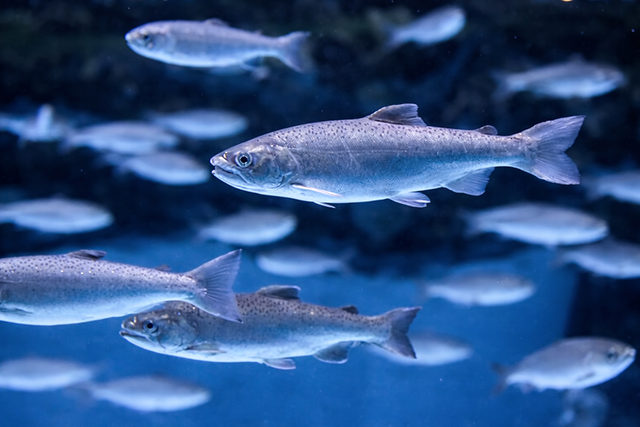
Due to global population growth and declining fisheries resources, ensuring a stable and sustainable supply of seafood has become a major social issue.
Against this backdrop, recirculating aquaculture systems (RAS) are attracting attention.
This technology, which raises fish in an artificially controlled environment rather than relying on the ocean or rivers, is attracting attention as a new seafood business that combines reduced environmental impact with high production efficiency.
The mechanism and features of recirculating land-based aquaculture
Land-based recirculating aquaculture is an aquaculture system in which the water in the tanks is filtered, purified, and reused.
Unlike traditional marine or free-flowing aquaculture, a major feature of this system is its ability to precisely control water quality, temperature, oxygen levels, and feed amounts.
This system offers the following benefits:
- Significantly reduces water usage
- Prevents environmental pollution from wastewater
- Less susceptibility to weather and sea conditions
- Reduced risk of disease and parasites
As a result, the strength of land-based recirculating aquaculture is its ability to supply seafood of consistent quality year-round.
Potential for a sustainable seafood business
Land-based recirculating aquaculture is not only environmentally sound, but also a sustainable business.
Because it is less dependent on the natural environment, it is less susceptible to fluctuations in catches and resource depletion, allowing for planned production.
Furthermore, because it can be installed in urban and inland areas, it creates new value, such as:
- reduced transportation costs
- providing fresher seafood
- establishing a local production and consumption model
In recent years, it has attracted attention as a way to cultivate high-value-added fish species and as an export business with an eye toward overseas markets, and is expected to grow as a next-generation model for the seafood industry.
summary
Land-based recirculating aquaculture is an innovative aquaculture technology that combines environmental conservation with a stable supply.
In today’s world, where the sustainability of marine resources is being questioned, “managed aquaculture,” which does not leave things to nature, will play an increasingly important role in the future.
Ensuring quality and profitability while being environmentally friendly.
Land-based recirculating aquaculture has great potential as a promising option for paving the way to the future of the fisheries industry.